If you’ve ever looked at a Seoul subway map and felt instantly overwhelmed — you’re not alone. Dozens of colored lines, hundreds of station names, multiple operators. It looks complicated. But once you understand the structure, it becomes one of the most useful tools you’ll have during your time in Korea.
Here’s what you actually need to know.
Lines, Coverage, and Price
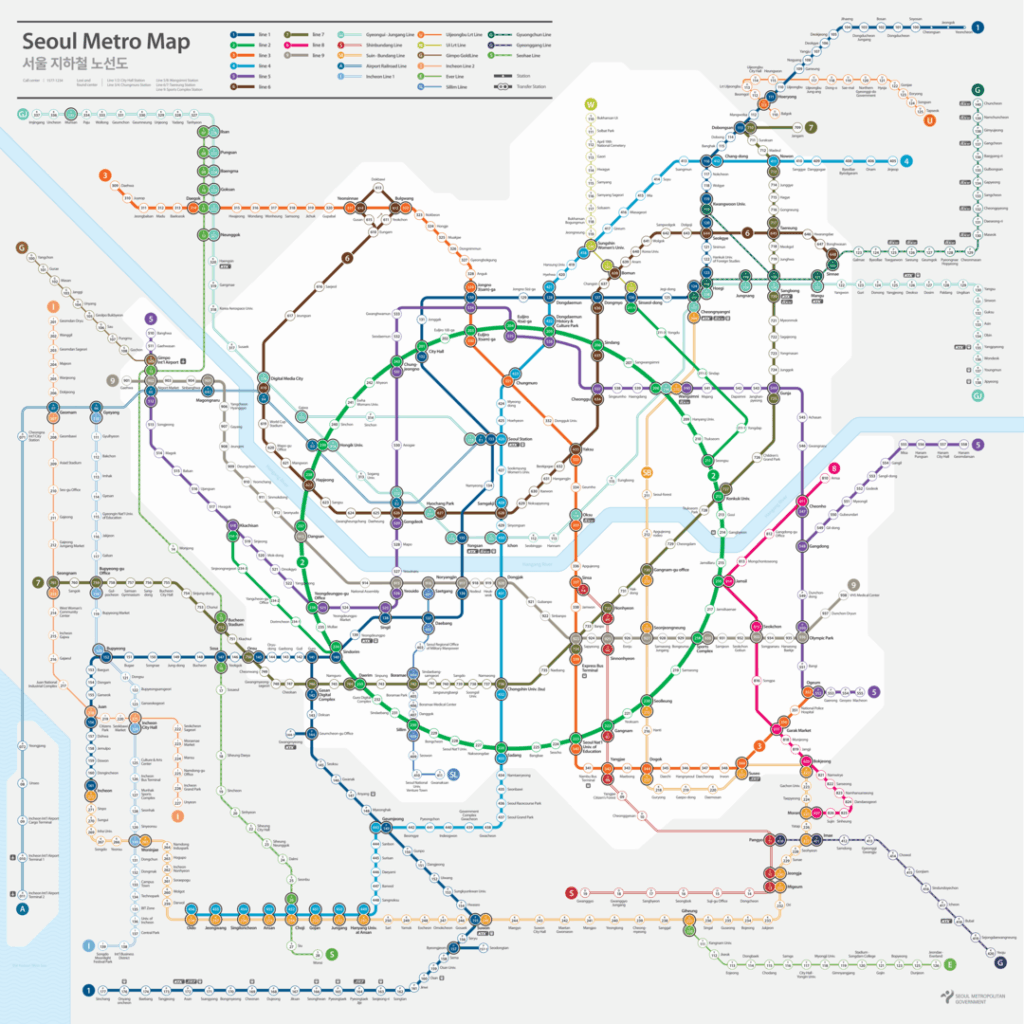
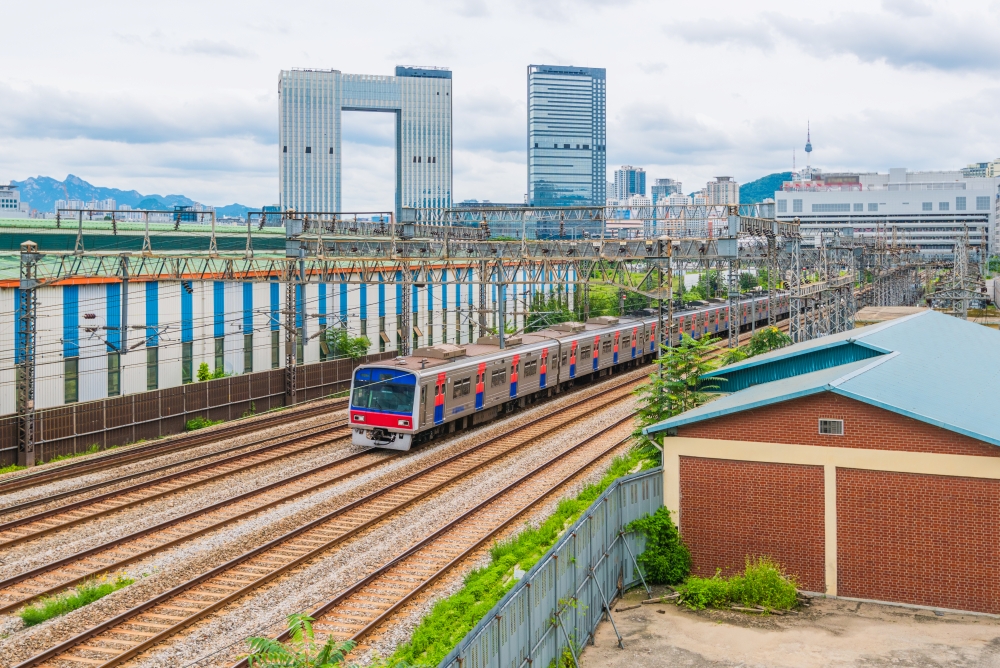
The Seoul Metropolitan Subway is a 23-line network stretching over 940 km with more than 600 stations. It’s run by several operators — mainly Seoul Metro (Lines 1–9), Korail (national rail), and a few private companies — but from the passenger’s side, it all works as one system. One card, tap in, tap out.
How far does it actually go?
- Line 1 runs south to Cheonan and Sinchang — about 90 km from central Seoul — and north to Dongducheon, near the DMZ. It functions more like regional rail than a typical metro for much of its route.
- The Gyeongchun Line reaches Chuncheon, the capital of Gangwon Province, about 80 km away.
- The Suin–Bundang Line stretches 91.6 km from Incheon all the way through Suwon to Cheongnyangni in eastern Seoul.
- AREX (Airport Railroad Express) connects Incheon International Airport to central Seoul in 43 minutes by express, or more gradually via the all-stops service.
Cities like Suwon, Seongnam, Goyang, and Namyangju are all within direct subway reach from Seoul. This isn’t just a city metro — it’s the transportation backbone of an entire region.
How much does it cost?
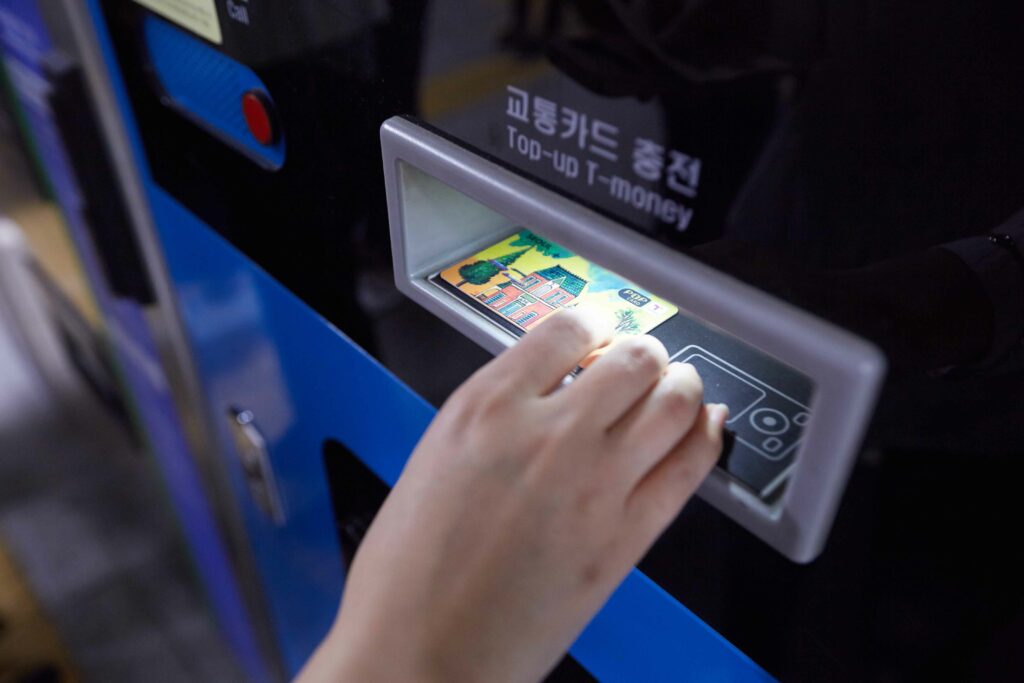
The base fare (as of mid-2026) is ₩1,550(1.1 USD) with a T-money card, or ₩1,650 with a single-use ticket. That covers the first 10 km. After that, ₩100 is added per 5 km up to 50 km total. For most trips visitors make — say, Hongdae to Gyeongbokgung or Myeongdong to Itaewon — you’ll rarely pay more than ₩1,750.
Fun Facts and Statistics
Which stations do locals use the most?
- Jamsil Station (Line 2) — the busiest station in the network for the second year in a row, with around 156,177 daily users. It sits next to a major sports complex, Lotte World theme park, and a large shopping district. Everything converges here.
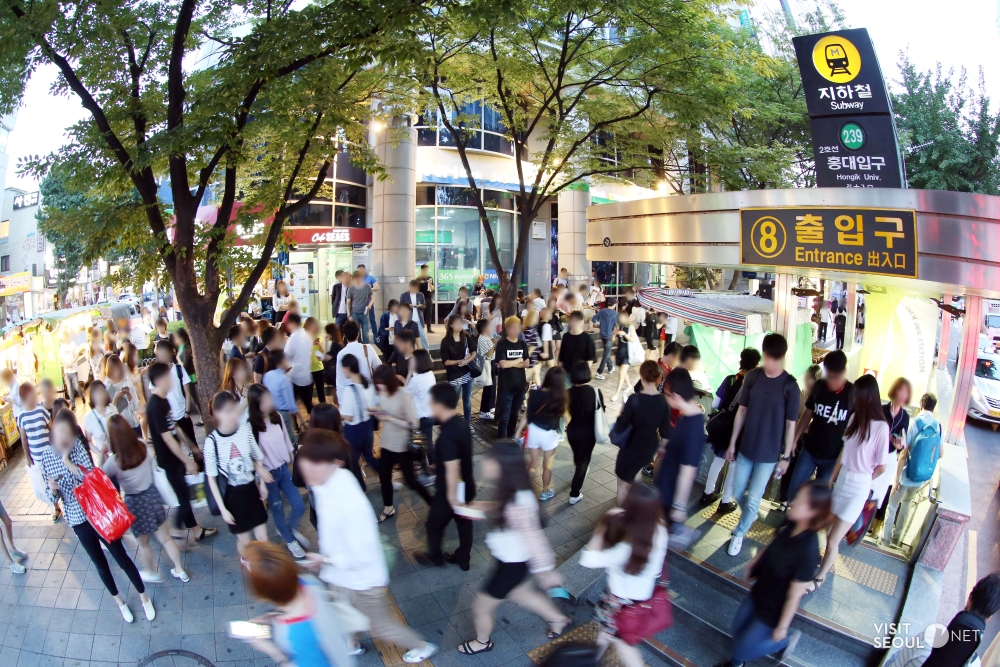
- Hongik University Station — ranked 2nd. A hub for nightlife, indie culture, and the arts scene.
- Gangnam Station — ranked 3rd. Held the top position for years. Still a major business and lifestyle center.
One station worth highlighting: Seongsu Station (Line 2). Just seven years ago it ranked outside the top 40. By 2024 it had risen to 13th place, driven by the neighborhood’s transformation into a center for K-fashion and pop-up culture. It’s where trends start before they spread.
Which stations do foreign visitors tend to go to?
- Myeongdong Station (Line 4) — shopping, street food, cosmetics
- Gyeongbokgung Station (Line 3) — the palace district and Bukchon
- Hongik University Station (Line 2/AREX) — nightlife, cafes, indie shops
- Gimpo Airport Station — saw a 28% increase in passenger boardings in 2024 as international tourism(from Japan and China) rose
Line 2 dominates
Eight of the top ten busiest stations belong to Line 2, the green circle line. Its daily ridership of 1.96 million passengers exceeds the combined daily ridership of all five other major cities of Korean subway — Busan, Daegu, Daejeon, Gwangju, and Incheon — put together.
Inside Seoul vs. outside Seoul
The 11-line Seoul Metro covers 338 stations out of 600 within city limits. The full metropolitan network adds hundreds more across Gyeonggi Province and Incheon — meaning about half the total stations in the system are helping carrying people outside Seoul.
Oldest stations
The original nine Line 1 stations — running between Seoul Station and Cheongnyangni Station — opened on August 15, 1974. These stations have been in continuous operation for over 50 years, making them some of the oldest active metro stations in Asia.
Useful Information for Foreign Visitors
Stations Where You Can Shop, Eat, and Explore — Without Tapping Out
Several major stations have large public areas outside the paid fare zone where you can spend hours without ever boarding a train.
- Express Bus Terminal Station (Lines 3, 7, 9) — Home to GOTO Mall, an 880-meter underground shopping street with around 630 stores. Clothing, shoes, home décor, flowers, snacks. It’s one of Seoul’s three largest underground shopping centers and popular with both locals and tourists.
- Gangnam Station (Line 2) — The Gangnam Underground Shopping Center has been around for decades. Trendy fashion at accessible prices, popular with Seoulites in their 20s and 30s.
- Jamsil Station (Line 2) — Another large underground shopping area, with direct connections toward Lotte World Mall.
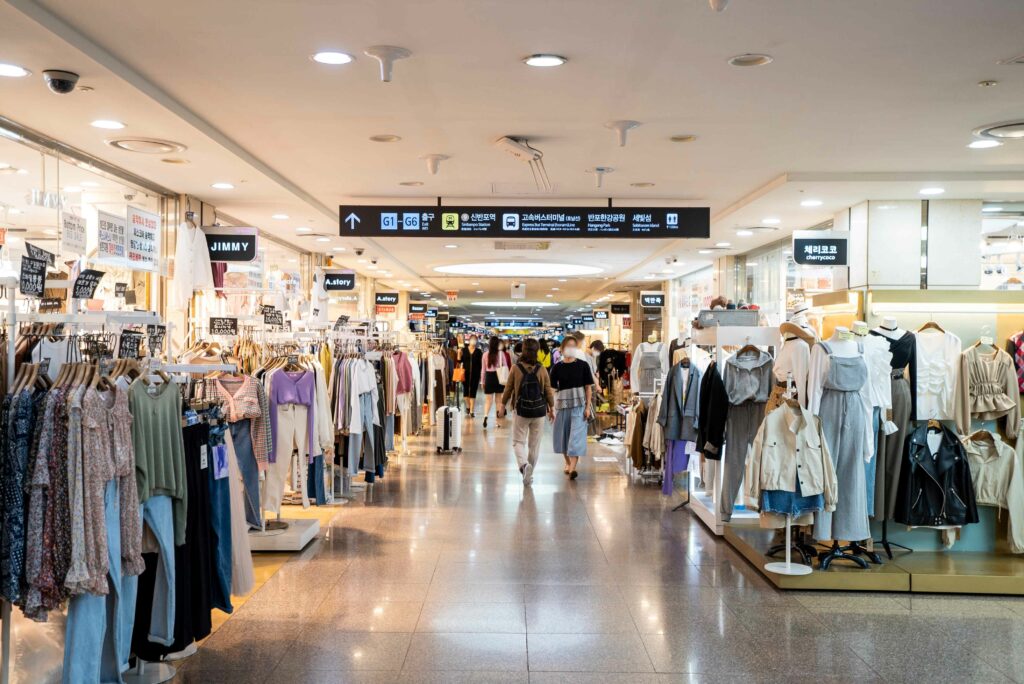
Beyond shopping, many stations have cafes, bakeries, and pharmacies. Eight stations — including Jongno 3-ga and Hapjeong — even have medical clinics inside, offering everything from internal medicine to dermatology. No appointment needed, open to anyone.
Luggage Storage
Don’t want to drag your bags around all day? You have options.
- Seoul Station has the most storage in the network — over ten locker locations of varying sizes, plus a T-Luggage counter offering same-day delivery of your bags to another station or to Incheon Airport.
- Most major transfer hubs have T-Locker smart lockers. Walk up to the kiosk screen, select English, and set a PIN or use the fingerprint scanner. No Korean phone number required.
- The T-Locker app exists but is currently Korean-only — the walk-up kiosk method is easier for visitors.
Lost and Found
Left something on a train or at a station? Contact Seoul Metro:
- Phone: +82-2-1577-1234
- English support is available through translation display systems at 11 high-traffic stations. For other stations, station staff can help facilitate contact.
- Items found on trains are typically sent to the nearest staffed station. Visit or call as soon as possible.
Pass Deal for Foreign Visitors
The Seoul Climate Card Tourist Pass is the best option for most short-term visitors. It offers unlimited rides on all Seoul Metro lines, city buses, and Seoul Bike (Ttareungi). The price is ₩65,000 for 30 days (about $47 USD). Since March 2025, it can be purchased and reloaded with international credit and debit cards — which was a big improvement.
It covers Lines 1–9 and several Korail segments within Seoul, including the AREX all-stops service from downtown Seoul to Incheon Airport (note: you can board to the airport, but not from it with this pass).
How Fares Are Actually Calculated
This is something many visitors miss, and it saves money once you understand it.
Seoul’s fare system doesn’t charge per journey or per transfer. It calculates total distance across your entire trip — including transfers between subway lines and buses. If you move from a subway to a bus within 30 minutes of exiting, the system treats it as one continuous trip and only charges the extra distance. You don’t pay a new base fare.